
Lavaux: a walk through the terraced vineyards above Lake Geneva
The buttons lead to the activities' GetYourGuide listings. The site earns no commission for now; if affiliate links are added, this will be stated here.
Picture a staircase of stone and vines stepping down to the lake for kilometres, villages huddled around their church towers and, across the water, the Alps of Savoy. Lavaux, between Lausanne and Vevey, is one of the most spectacular landscapes in Switzerland, and one of the easiest to explore on foot.
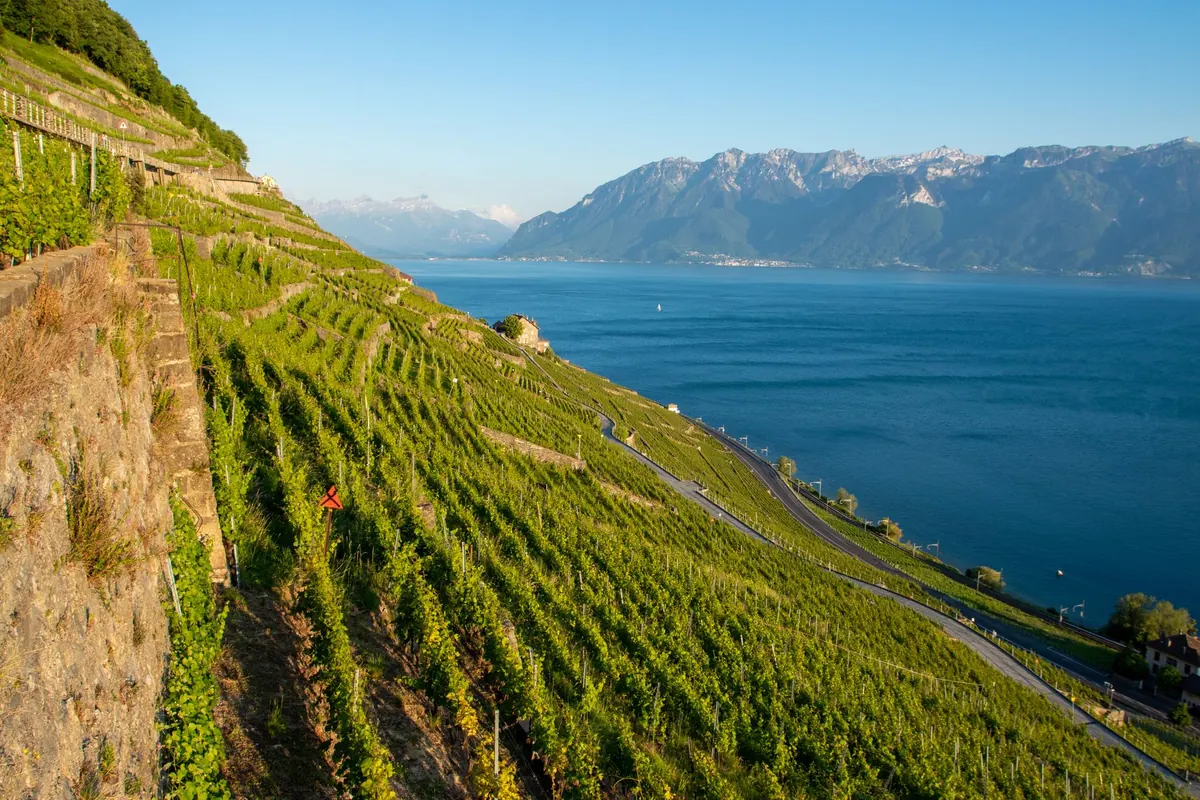
A landscape shaped by hand over the centuries
Lavaux stretches for some thirty kilometres along the northern shore of Lake Geneva, from Lutry to the outskirts of Montreux. Its terraces were laid out from the Middle Ages onwards, when Cistercian monks began farming slopes too steep for anything else. Generations of winegrowers then built up the walls, stone by stone. The site has been a UNESCO World Heritage Site since 2007.
People here say the vines enjoy "three suns": the one in the sky, the one reflected by the lake, and the one given back by the stone walls in the evening. The star grape is Chasselas, a dry, mineral white that goes with fondue, lake perch fillets and an aperitif on a terrace.
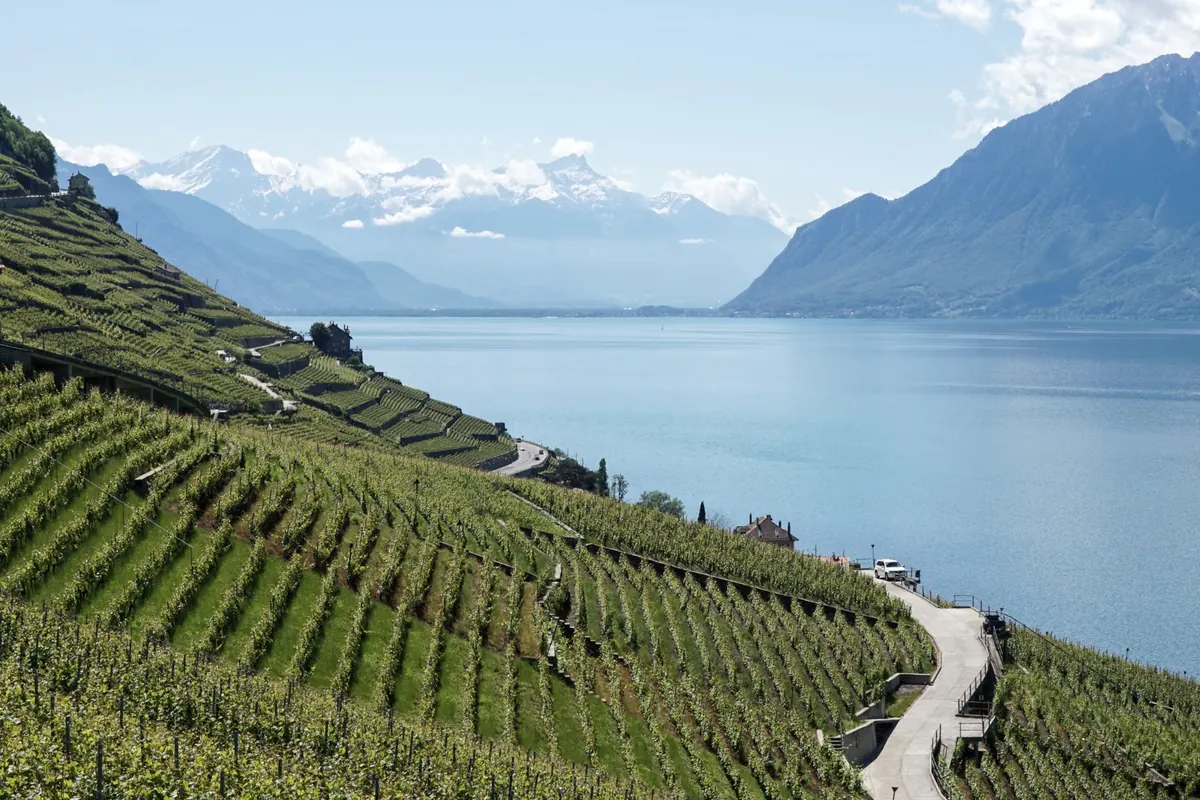
On foot between the villages
The joy of Lavaux is wandering aimlessly among the vines. Paths cross the plots, follow the walls and link villages that seem untouched by time: Lutry and its lakefront, Cully, Epesses, Rivaz, Saint-Saphorin with its steep lanes, and Chexbres perched above it all.
The trick is to go up by train and come down on foot. The little "vineyard train" links Vevey and Chexbres, climbing right through the plots; from there, just follow the slope down to the lake. Wear good shoes: the paths can be steep and there are plenty of steps.
To understand what you are looking at, a guided walk from Lutry tells the story of the terraces and the winegrowers' work:
- Lavaux: discover the UNESCO-listed terraced vineyards
A guided walk between the stone walls, to understand how vines are grown on slopes this steep.
Check dates on GetYourGuide
Tasting Chasselas with the winegrowers
Lavaux cellars are often family-run. Some open their carnotzet (tasting cellar) to visitors at weekends, others only by appointment. Dézaley and Calamin, the region's two grands crus, can be tasted on the spot. If you'd rather not worry about driving, an organised wine day takes you from cellar to cellar:
- Wine tour in the canton of Vaud: Lavaux vineyards
Several cellars, guided tastings and time to talk Chasselas with the winemakers.
Check dates on GetYourGuide
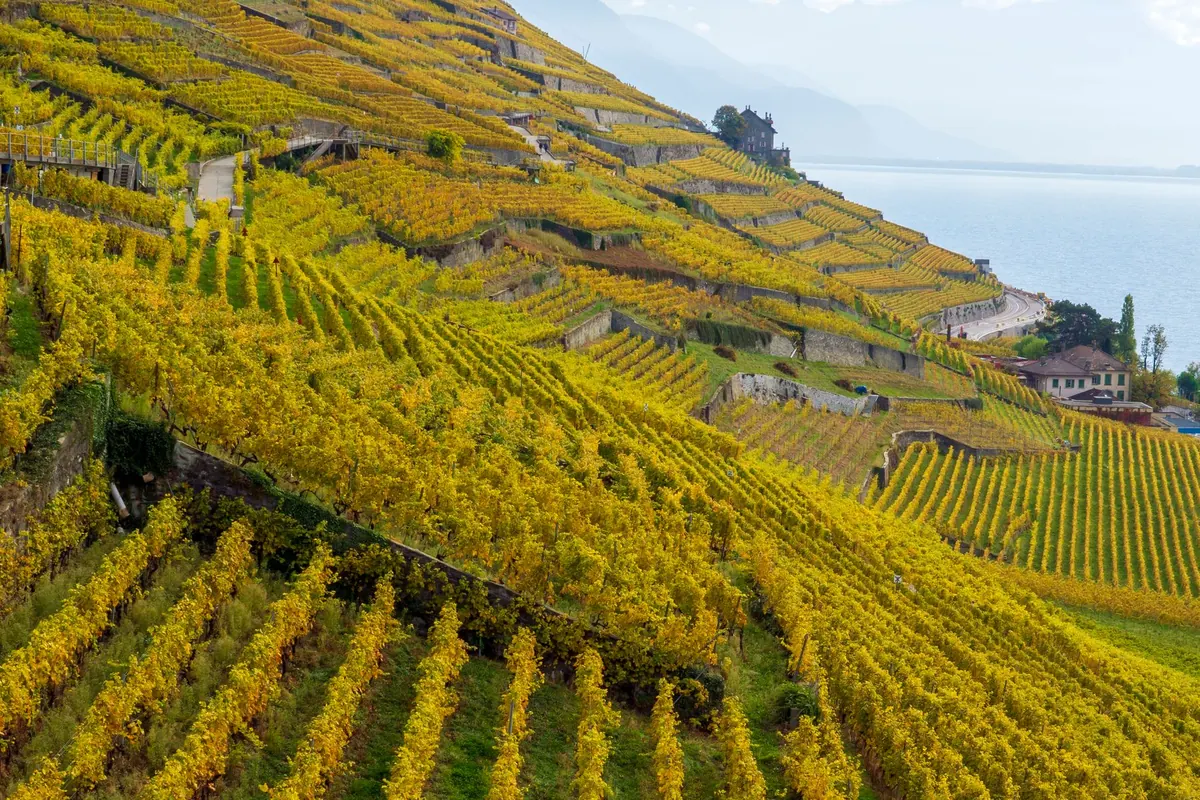
Lavaux from the lake
From the deck of a boat, Lavaux reveals itself in full: you finally grasp the scale of these tiers climbing up to the forest. A cruise from Lausanne follows the whole vineyard and carries on towards the Riviera.
- Lausanne: 3-hour cruise along the Riviera and Lavaux
The terraces from the water, then the Riviera almost to Chillon: the best viewpoint over Lavaux is the lake.
Check dates on GetYourGuide
→ All activities in Lausanne and Lavaux on GetYourGuide
Practical information
- Getting there: regular trains from Lausanne to Lutry, Cully and Vevey; the vineyard train runs from Vevey up to Chexbres.
- How long: half a day for a walking loop, a full day with a tasting and a meal.
- Where to eat: village inns serve perch fillets and local dishes; book ahead on fine weekends.
- Combine with: Montreux and Chillon Castle, or a Lake Geneva cruise.
Activities selected on GetYourGuide; durations and starting points taken from the listings, checked on 24 November 2026. Times, prices and availability change: check the listing before booking.
Frequently asked questions
Where should I start a walk in Lavaux?
Lutry, Cully and Chexbres are the most convenient starting points, all served by train. A simple plan: take the train up to Chexbres, then walk down through the vines to the lakeshore.
When is the best time to visit Lavaux?
From spring to autumn. September and October are the loveliest months: the vines take on their colours and it is harvest time. In winter the paths are still walkable, but many cellars only open by appointment.
Do I need a guided tour?
No, the paths are free and waymarked. A guided tour mainly adds explanations about how the terraces were built and how the vines are worked, and often a tasting.