
Lauterbrunnen and the Jungfraujoch: the waterfall valley and the Top of Europe
The buttons lead to the activities' GetYourGuide listings. The site earns no commission for now; if affiliate links are added, this will be stated here.
A valley so deep it looks carved with an axe, cliffs hundreds of metres high with waterfalls drifting down like lace veils, a white church spire standing in the meadows… Lauterbrunnen looks like a fairy-tale set. And this is where the train starts for the Jungfraujoch, Europe's highest railway station, on the edge of the largest glacier in the Alps.
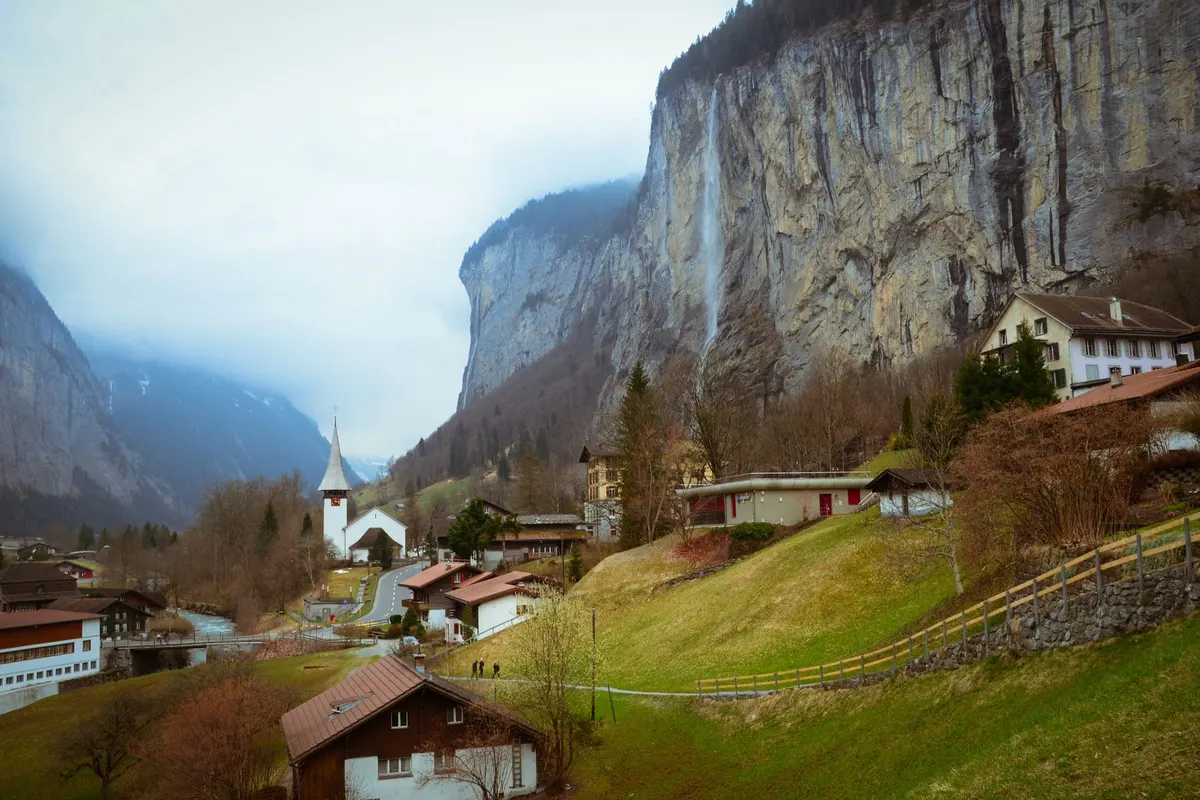
Lauterbrunnen, the valley of waterfalls
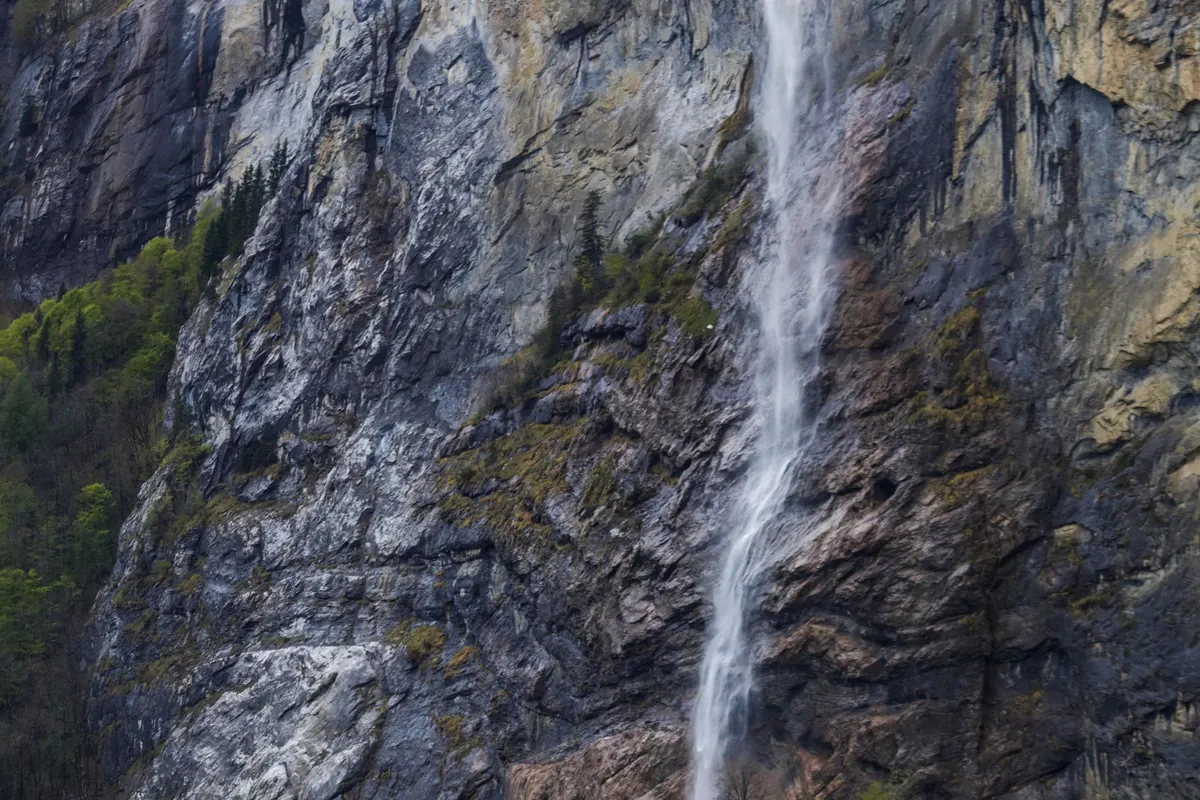
The valley is said to have 72 waterfalls. Whatever the exact number, you look up the moment you step off the train. Right above the village, Staubbach Falls drops from a cliff almost 300 metres high and turns into mist before it reaches the ground. In the warmer months a path leads up behind the curtain of water.
A little further up the valley, the Trümmelbach Falls thunder inside the mountain itself: meltwater from the Eiger, Mönch and Jungfrau glaciers swirls through the rock, and a lift cut into the mountain lets you follow it up close, usually from April to November.
Mürren and Wengen, car-free balconies
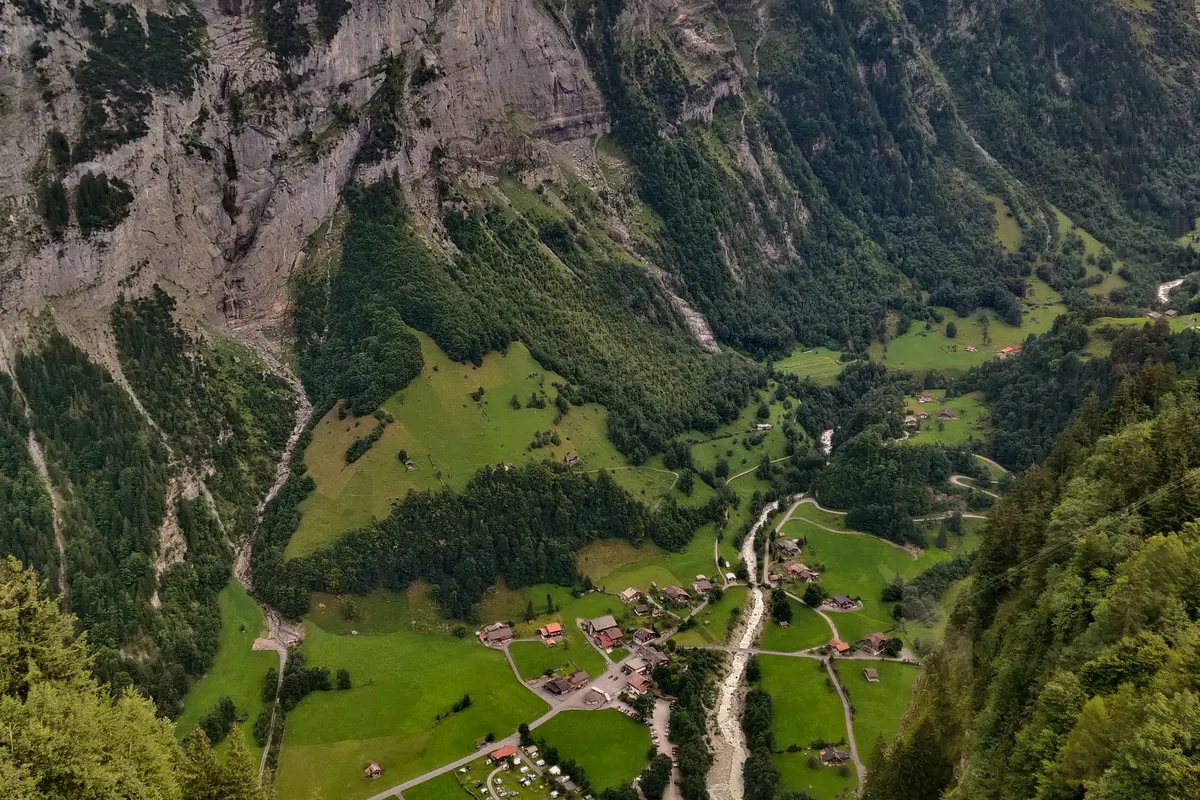
On either side of the valley, two clifftop villages can only be reached by train or cable car. In Mürren, chalets line the edge of the drop, facing the Eiger, Mönch and Jungfrau. Wengen, on the other side, is where the train passes on its way to Kleine Scheidegg and the Jungfraujoch. You walk in silence here, without a single engine.
The Jungfraujoch, Europe's highest station
The Jungfrau Railway runs through the Eiger in a tunnel dug more than a century ago, stopping at windows cut into the rock face where you look out over the glacier. At the top, at 3,454 metres, the Sphinx terrace opens onto the Aletsch Glacier, a long ribbon of ice listed as a UNESCO World Heritage Site. There is also the Ice Palace, with corridors carved into the glacier, and a plateau where you walk in snow even in August.
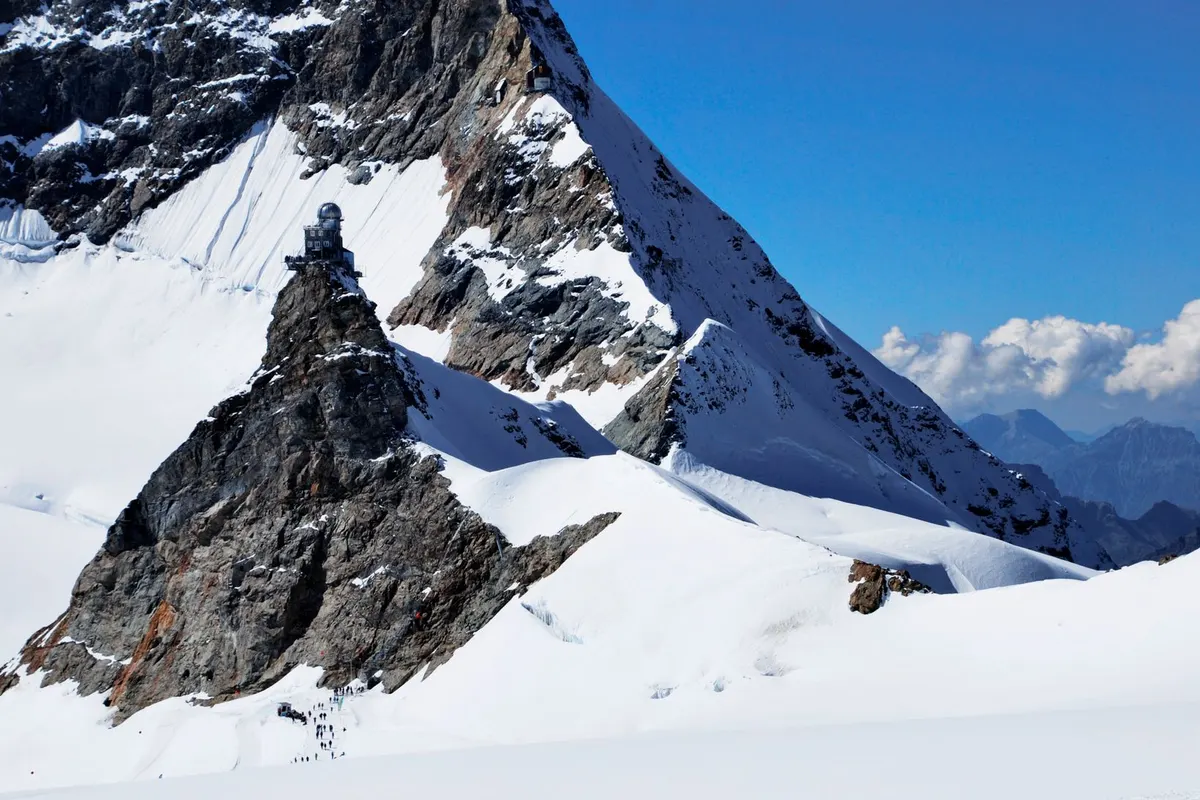
Two routes lead to the top: the Eiger Express cable car from Grindelwald, the fastest, or the classic line through Lauterbrunnen and Wengen. The best plan is to combine them, going up one way and down the other.
- Entry ticket: self-guided day trip to the Jungfraujoch
The ticket to go up at your own pace, via the Eiger Express or the classic line through Lauterbrunnen, with the Jungfrau Railway seat reservation included.
Check dates on GetYourGuide - From Interlaken: guided tour to the Jungfraujoch, Top of Europe
Up by the Eiger Express cable car and the Jungfrau Railway, down via Lauterbrunnen: the full loop, with a guide.
Check dates on GetYourGuide
From Zurich or Geneva, without staying overnight
The Jungfraujoch can also be done as a day trip from the big cities. It is a long day, but everything is organised: transport, mountain tickets and free time at the top.
- From Zurich: day trip to the Jungfraujoch, Top of Europe
The organised return trip from Zurich, to reach the Jungfraujoch without staying overnight in the Oberland.
Check dates on GetYourGuide - From Geneva: Jungfraujoch, Top of Europe, and Interlaken
The same day out from Geneva, with a stop in Interlaken between the two lakes.
Check dates on GetYourGuide
→ All activities at the Jungfraujoch on GetYourGuide
Planning your trip
- Weather: set off early on a clear day and check the summit webcams before leaving.
- Altitude: at nearly 3,500 metres you may feel short of breath: take the stairs slowly and drink water.
- What to wear: a warm jacket, sunglasses and closed shoes, whatever the season.
- Several days in the Oberland: a regional pass can work out cheaper than separate tickets.
- Switzerland: Berner Oberland Regional Pass, 2nd class
The regional pass for the Oberland: trains, boats and many of the region's mountain lifts over several days.
Check dates on GetYourGuide
→ All activities in Lauterbrunnen on GetYourGuide
Activities selected on GetYourGuide; durations and starting points taken from the listings, checked on 24 November 2026. Times, prices and availability change: check the listing before booking.
Frequently asked questions
How long does it take to get up to the Jungfraujoch?
From Interlaken, allow about one and a half to two hours depending on the route: via the Eiger Express cable car from Grindelwald, or on the classic line via Lauterbrunnen, Wengen and Kleine Scheidegg. Plan a whole day so you can enjoy the summit without rushing.
Is the Jungfraujoch worth it in bad weather?
Best avoided: when the summit is in cloud, you see neither the glacier nor the mountains. The region's webcams let you check visibility on the morning itself before you set off.
Can you visit Lauterbrunnen without going up to the Jungfraujoch?
Yes, and it already makes a wonderful day: Staubbach Falls, the Trümmelbach Falls inside the rock, and the villages of Mürren or Wengen, reached by train or cable car.