Lucerne, Pilatus and the Rigi: a day between lake and summits
The buttons lead to the activities' GetYourGuide listings. The site earns no commission for now; if affiliate links are added, this will be stated here.
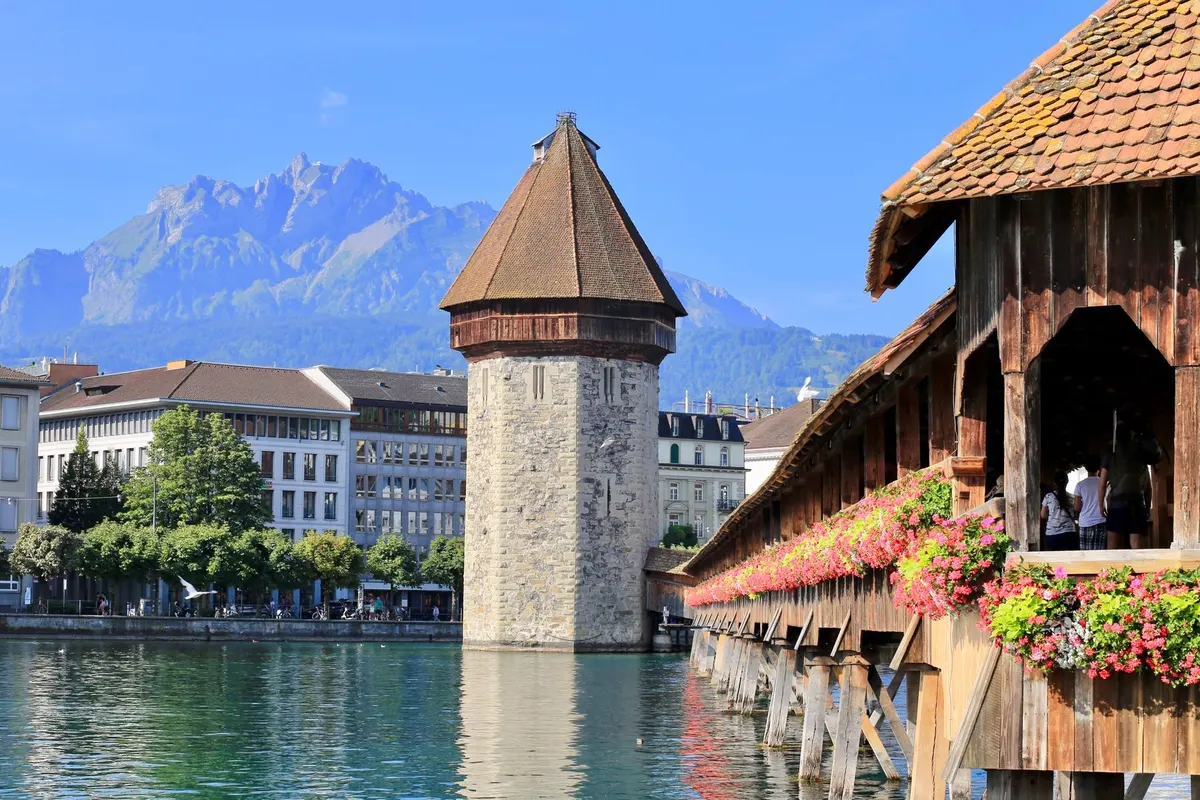
A flower-decked wooden bridge zigzagging across the river, an octagonal tower standing in the water, painted façades and, in the background, a jagged mountain reflected in the lake. Lucerne is a postcard come to life, and all around it, Lake Lucerne carries you by boat to the foot of two legendary peaks: Pilatus and the Rigi.
The old town and the Chapel Bridge
It all starts on the Kapellbrücke, the Chapel Bridge. This long covered wooden bridge, built in the 14th century, is one of the oldest in Europe. Under its roof, painted panels tell the town's history; halfway across stands the Water Tower, once used as a prison and a treasury. In spring and summer, geraniums spill over the railings.
On the right bank, the old town lines up its squares of painted façades. A little higher up, the Lion Monument, carved into the rock, honours the Swiss Guards who fell in Paris in 1792. For the full picture, climb the Musegg ramparts, where several towers are open in the warmer months.
Lake Lucerne by boat
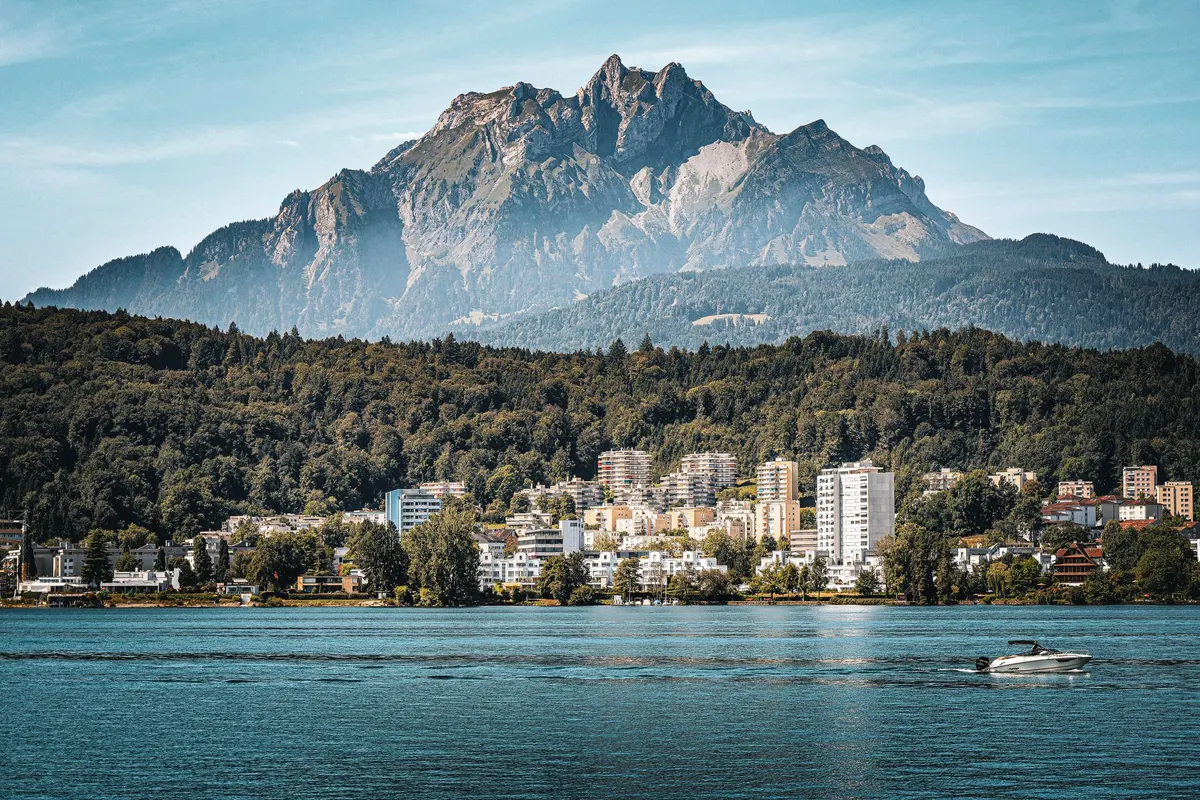
The lake has a strange shape, all arms and bays reaching deep between the mountains. Out on the water, you understand why the Swiss call it the cradle of their country. An hour on a catamaran is enough to see Lucerne from afar, with Pilatus on one side and the Rigi on the other.
- Lucerne: round-trip catamaran cruise on Lake Lucerne
An hour on the water facing Pilatus, the Rigi and the Bürgenstock: the simplest way to see Lucerne from the lake.
Check dates on GetYourGuide
Pilatus and the world's steepest cogwheel railway
Above Lucerne, Pilatus raises its ridges to just over 2,100 metres. You can ride up on the cogwheel railway from Alpnachstad, the steepest in the world, which clings to the cliff at a dizzying gradient. At the top, galleries cut into the rock and short paths lead to viewpoints over the lakes and the Alps.
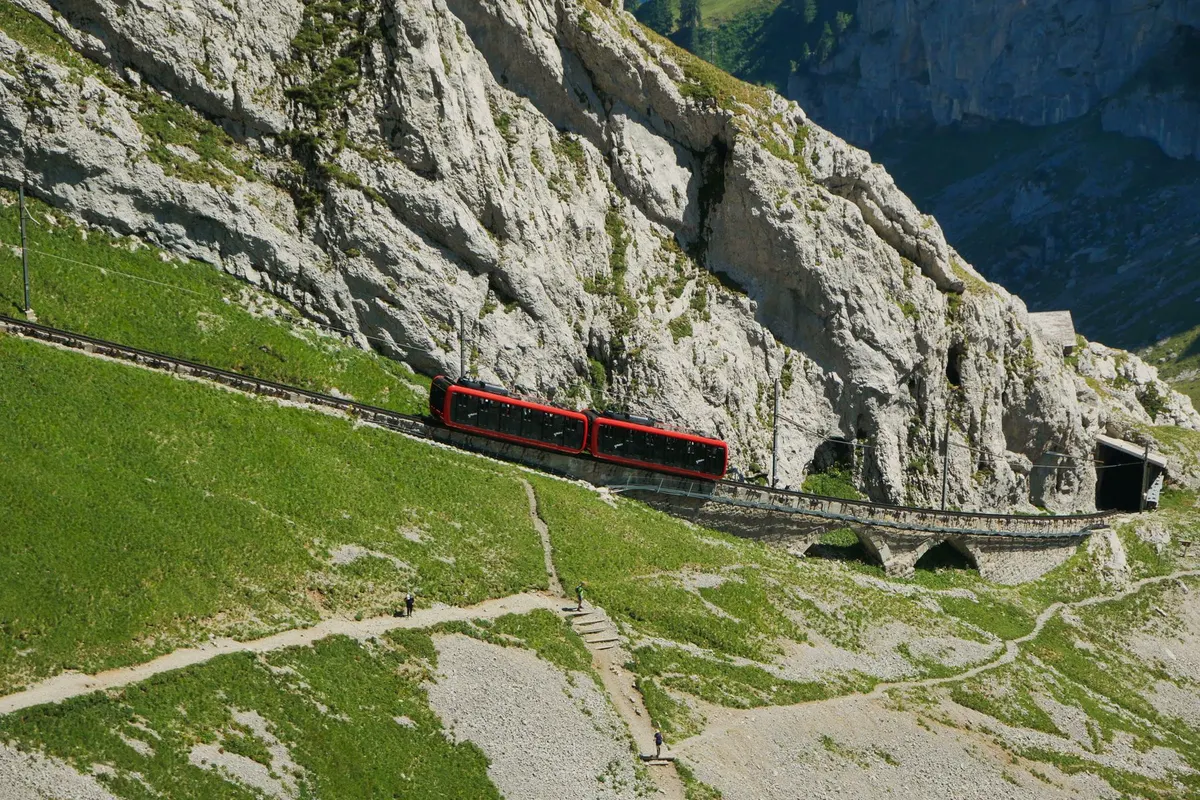
The classic loop: boat to Alpnachstad, cogwheel train to the summit, then cable car and gondola down to Kriens, and a bus back to town. You can do it on your own or with a guide.
- From Lucerne: Mount Pilatus gondola, cable car and boat trip
Bus to Kriens, gondola, cable car to the summit, then cogwheel railway and boat back: the Pilatus loop, self-guided.
Check dates on GetYourGuide - From Lucerne: guided half-day tour of Mount Pilatus
The same mountain with a guide, a short walk at the top and the return by boat.
Check dates on GetYourGuide
The Rigi, "Queen of the Mountains"
Across the lake, the Rigi is the walkers' mountain. The railway from Vitznau, the first mountain railway in Europe, climbs through pastures to Rigi Kulm, where the view takes in around ten lakes. Halfway up, the Rigi Kaltbad baths let you swim in warm mineral water facing the peaks.
- Lucerne: boat trip, Mount Rigi train and mineral baths ticket
Boat, Rigi cogwheel railway and entry to the Rigi Kaltbad baths, with lake views from the warm water.
Check dates on GetYourGuide
→ All activities in Lucerne on GetYourGuide
Planning your trip
- Getting there: Lucerne is about an hour by train from Zurich and Bern.
- Season: May to October for the full Pilatus loop; the Rigi can be visited all year round.
- Tip: go up early in the morning, before the clouds settle on the summits.
→ All activities on Mount Pilatus on GetYourGuide
Activities selected on GetYourGuide; durations and starting points taken from the listings, checked on 24 November 2026. Times, prices and availability change: check the listing before booking.
Frequently asked questions
Does the Pilatus cogwheel railway run in winter?
No, it only runs in the warmer months, usually from May to November. In winter you reach the summit by gondola and cable car from Kriens. The exact dates are published each year by the Pilatus railways.
Pilatus or Rigi: which should I choose?
Pilatus is the more dramatic, with its cliffs and very steep cogwheel railway. The Rigi is gentler: wide grassy slopes, easy trails, views over several lakes and mineral baths at Rigi Kaltbad. Both are reached by boat from Lucerne.
How much time do you need in Lucerne?
Half a day is enough for the old town, the Chapel Bridge and the Lion Monument. Allow a full day if you add a summit, and two days to do both Pilatus and the Rigi.